

Mexican banks adopt in-branch facial biometrics with 90% match against INE
The CNBV now allows facial biometrics in branches for level 3 and level 4 accounts. Here are the requirements, the 90% match against INE, and what it means for your company.
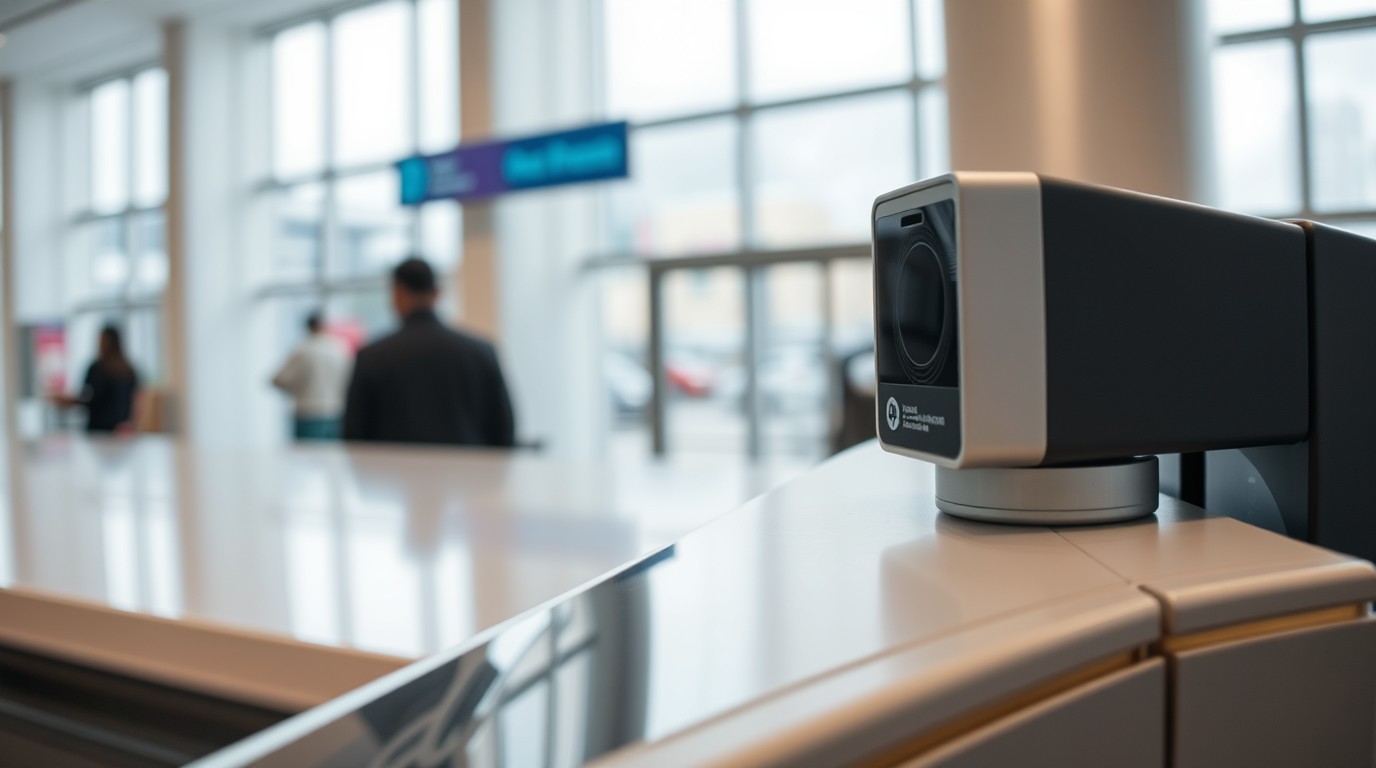
As of November 2026, the National Banking and Securities Commission (CNBV) allows banks in Mexico to validate customer identity with facial biometrics for in-person transactions. The alternative to fingerprint scanning was written into the Single Circular for Banks and its Annex 71, as reported by El Universal on October 20, 2026.
The measure applies only to level 3 and level 4 accounts, the ones with the strictest know-your-customer requirements, and only in branch; digital banking is excluded because it already operates with remote biometric validation. The first enrollment must be matched against an official database, such as that of the National Electoral Institute (INE), with a minimum match of 90%, according to El Universal. The amended text covers articles 51 Bis through 51 Bis 5 of the Circular and its Annex 71. For a payments or digital identity operator, the change sets a technical floor: liveness detection under the ISO 30107 standard, non-reconstructible templates under ISO 24745, and an alternative for anyone unable to provide biometric data.
The risk context explains the urgency. According to the Sumsub identity fraud report cited by El CEO on November 6, 2026, deepfake cases in Mexico grew 484% year over year in 2025, the second-largest increase in Latin America after Guatemala. Fabián Fabela, director of Product Marketing at Sovos, told El CEO that "With 5 dollars you can already make a perfect deepfake" and that three seconds of recording is enough to clone a voice with 70% fidelity. Fabela argues that facial biometrics is the hardest of the three to replicate, behind voice and fingerprint, and that it does not replace filters: it adds another layer. Adolfo Loera, founder of Biometría Aplicada, agrees that the defense lies in liveness detection, which forces the user to move or speak in front of the camera.
The data leaves a concrete decision on the table for any company that authenticates customers: how many layers its process requires today, and whether it can prove liveness against a generated video. Bank facial biometrics sets the technical standard that the rest of the payments ecosystem will tend to replicate.
This article was drafted with the assistance of artificial intelligence from verified sources and reviewed by a human editor before publication.